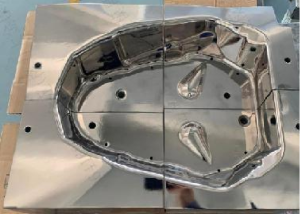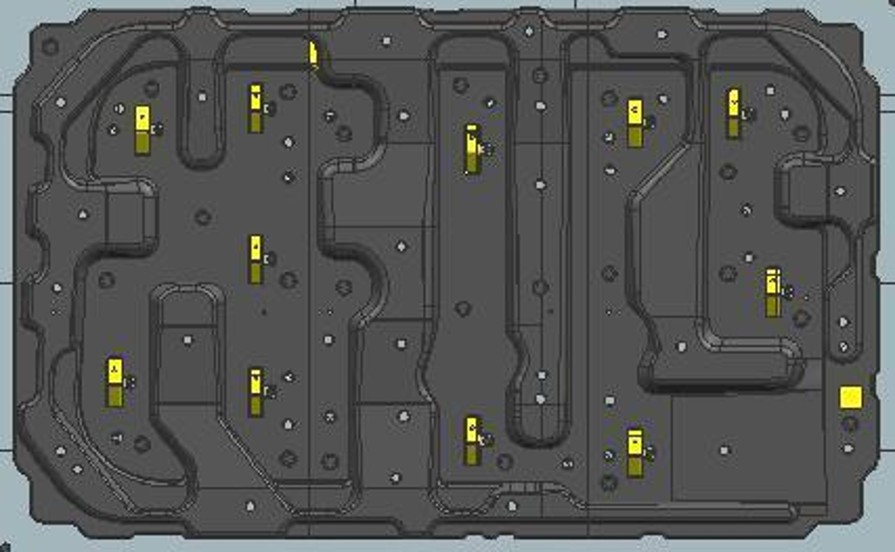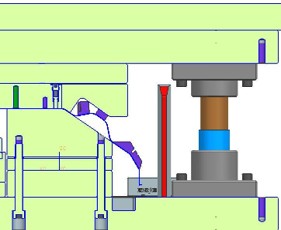
As stamping efficiency keeps improving to accommodate higher stamping speeds, continuous optimization of mold structure alone is insufficient. It is also necessary to increase the hardness of the mold working surface to protect stamping components from damage and effectively improve the quality of stamped parts. Coatings for mold components can be applied to punches and cutting edges of blanking dies, as well as forming punches and dies.

To ensure high-speed continuous operation and improve durability, stamping molds need coating technology on their components.
To enable the die to operate continuously at high speed and extend its service life, sheet metal stamping dies require the application of coating technology on die components.
(1) TD Coating: TD coating is a super-hard surface treatment technology for tools using metal carbide diffusion coating. Surface hardness: HRC 58-63, surface finish: Ra 0.2, carbide layer thickness: 0.005mm. It can be applied to various forming, sizing, flanging, hole-flanging and drawing dies. Suitable mold materials: SKD11, CR12MOV, DC53. A uniform coating layer can be formed regardless of workpiece geometry with minimal mold deformation during treatment. Pre-coating treatment requirements for mold components: tempering cycles: 3 times, tempering temperature >500°C; stress relief treatment must be added before finish machining.
(2) TiCN Coating: Titanium carbonitride. Surface hardness: HRC 60-65, surface finish: Ra 0.2, carbide layer thickness: 0.005mm. Suitable for various punching, forming, sizing, flanging, hole-flanging and drawing dies. Compatible mold materials: SKD11, CR12MOV, DC53. Provides uniform coating coverage regardless of workpiece geometry with minimal deformation during treatment. Pre-coating requirements: tempering cycles: 3 times, tempering temperature >500°C, stress relief treatment required before finish machining.
(3)Hard chrome plating: Plating thickness 0.005- 0.015 mm, hardness after plating HRC 60-65. Suitable for various forming, sizing, flanging, hole-flanging and drawing dies. After plating, joints may have some unevenness and require assembly-level smoothing. Precision-machined holes that should not be plated must be plugged. The chrome plating tank must be large enough to accommodate the part dimensions.
The coating technology applied to stamping die components is an indispensable part of the automated stamping industry. It provides comprehensive, multi-angle protection for molds, effectively extends the service life of critical mold parts, prevents the production of defective workpieces, significantly reduces labor requirements, lowers production costs, and enhances market competitiveness.