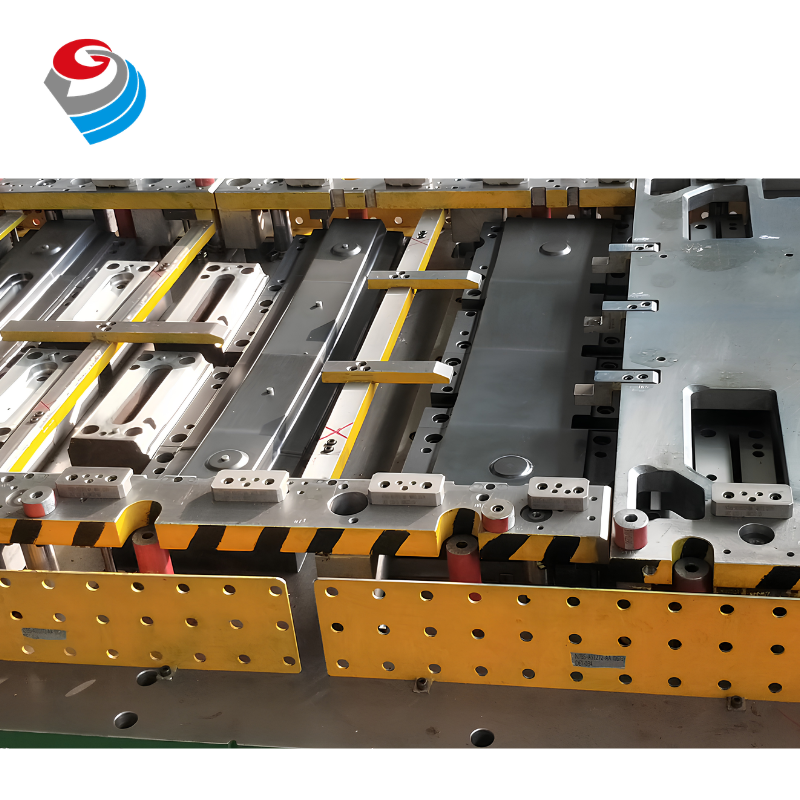
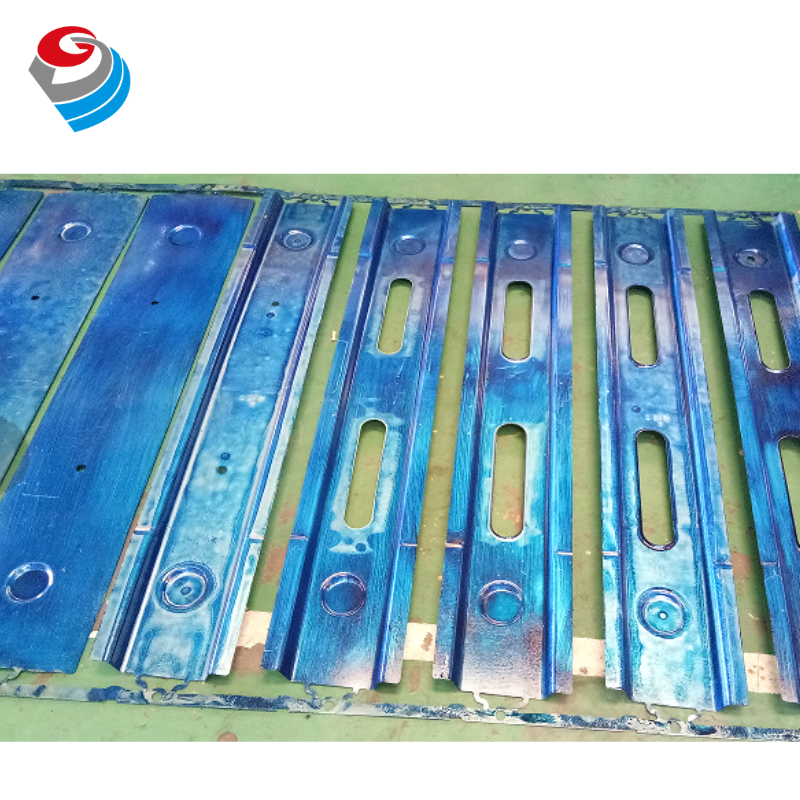
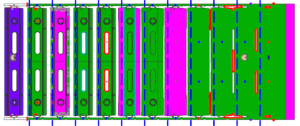
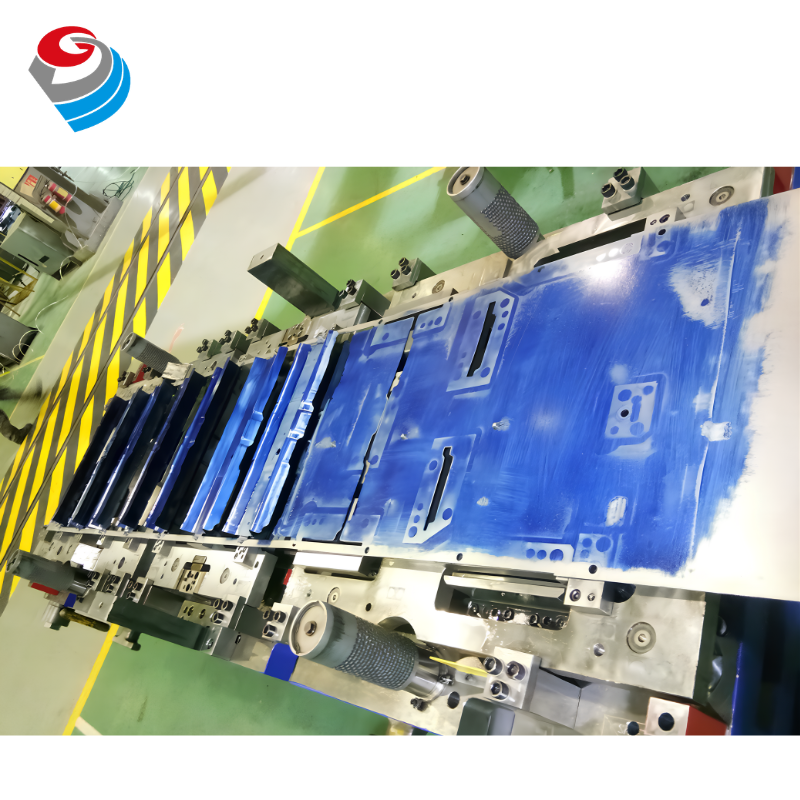
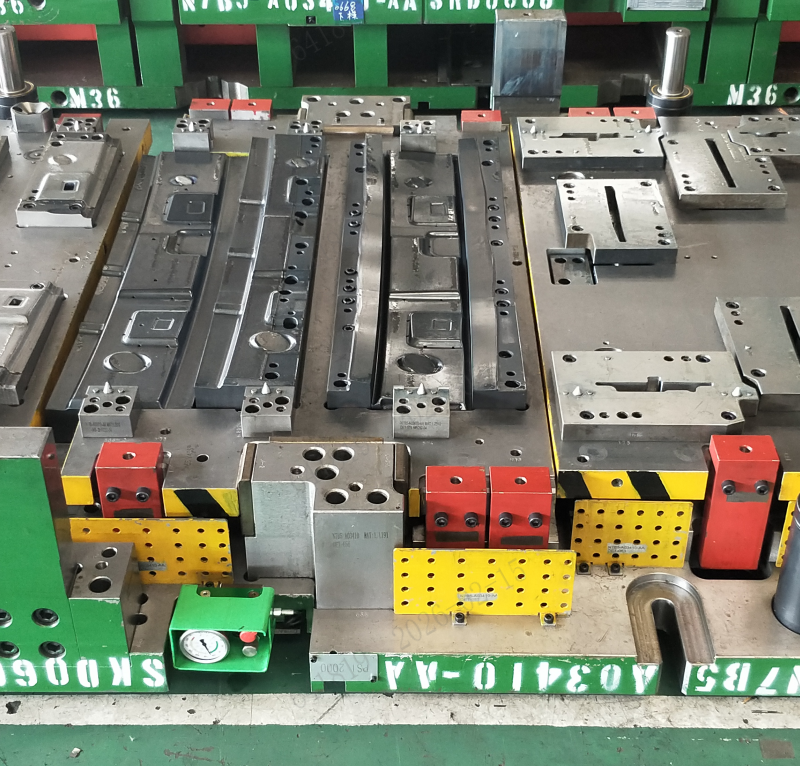
This is a beam reinforcement panel in material WSS-M1A367-A36, t = 1.2 mm. The geometry is moderate, but quality requirements are stringent — springback compensation must be implemented in the die design.
1. The Compensation & Surface Strategy
| Springback compensation is applied to the main surfaces at the forming station to ensure the top primary surface meets tolerance requirements. At the flanging station, compensation is incorporated specifically for flanged areas. The restrike station is machined strictly to the original CAD surface, providing a final calibration step that enables fine-tuning of the part geometry. |
2. Piercing Strategy for Dimensional Control
| Reference holes are pierced after the restrike operation to ensure that all hole locations are established relative to a fully formed and dimensionally stable part. This sequence improves process capability and enhances overall part quality. |
By integrating CAE analysis—specifically AutoForm—we optimize forming surfaces and trim lines using simulation software. This approach simplifies die design, significantly reduces tryout time, improves design reliability, and lowers tooling costs. The stamping die is validated through practical production, demonstrating consistent quality and stable performance.